
After the fiasco in March this year over the share sale in Oil and Natural Gas Corporation ( ONGC ), the government has softened its stand over the pricing.

Earlier this year, the government raised around Rs 1,000-crore by selling its stake in Satluj Jal Vidyut Nigam.

It will be helpful advice for a chief minister-in-waiting who is going to have to deal with empty coffers and overflowing expectations

Top sources in the government told Business Standard that Railway Minister and Trinamool Congress chief Mamata Banerjee's opposition to divestment plans of profit-making public sector entities prompted the cabinet not to take it up for discussion today.

Companies such as SAIL, ONGC, IOC and Hindustan Copper are waiting to hit the markets.

Aiming to raise Rs 40,000 crore (Rs 100 billion) from disinvestment, the government on Wednesday said it will sell its stake in 10 more PSUs, including IndianOil, MMTC, Coal India Ltd, SAIL, RINL and Shipping Corporation, in the current financial year.

SAIL is expected to raise around Rs 7,000-8,000-crore (Rs 70-80 billion) going by the prevailing market price of the stock.

Fresh worries for NTPC and NMDC auctions after the tepid response to the discount pricing of Hindustan Copper's stake sale.

The government is likely to go ahead with divestment in 12-15 public sector units, including SAIL, Coal India, Hindustan Copper, Satluj Jal Vidyut Nigam Ltd and Engineers India Ltd among others next fiscal to raise Rs 40,000 crore, as stated in the budget.

Nearly 80 stocks on the Bombay Stock Exchange (BSE) today witnessed an unusual price movement of up to 20 per cent. Belonging to 'S' and 'Z' categories and the trade-to-trade group, these scrips normally attract 5 per cent circuit breakers.

Traditionally, most PSUs have been cash-rich, which added to their value. However, the government has been tapping regularly into their cash resources to boost revenue for the exchequer
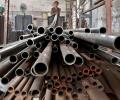
Given wild swings, investors are wondering where the metal market is going. There was a strong uptrend in industrial metal through much of the last three years due to fears of supply chain issues - first due to Covid-19 and then due to the Ukraine War. That uptrend broke down as it became apparent that global growth would moderate as inflation rose and Western Europe (the EU plus the UK) went into a near-recession and China was in a rolling lockdown.
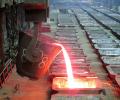
In a significant move to enhance its strategic resource security, India has officially released its first-ever critical minerals list, identifying 30 key critical minerals crucial to the nation's economic growth and technological development. This pioneering step aims at reducing import dependence, enhancing supply-chain resilience, and supporting the country's net-zero objectives. Union Minister Parliamentary Affairs, Coal and Mines Pralhad Joshi, while releasing the Critical Minerals for India report in New Delhi on Wednesday, said, "India is readying for an Atmanirbhar Bharat."

Adani Power will also be dropped from the S&P BSE 100 index

Govt seems to bullish to meet its disinvestment target in current fiscal.

The fall in metal and mining stocks comes on the back of weak Chinese trade data

With the new owner shelling out Rs 18,000 crore for the buyout of 'Maharaja' this would be the highest ever amount garnered through privatisation or even the cumulative sum garnered through strategic sale in 1999-00 to 2003-04. The government had garnered roughly over Rs 5,000 crore during that five-year period by privatising 10 CPSEs.

Metal sector is not too happy from Budget announcements for the sector
Analysts believe that investors should look at stocks that hit 52-week lows only if they have a dividend paying track record, are debt-free and have sound fundamentals.

BSE PSU index rallies 10% in one month; nearly a third of the stocks on the index has gained 20% over the period

Public-sector enterprise stocks have seen a good run thus far in 2023-24 (FY24), with the S&P BSE PSU Index surging by over 26 per cent during the period, compared to an 11 per cent increase in the benchmark S&P BSE Sensex.

After a hiatus of nearly two decades, the government's programme to privatise state-owned firms restarted with the handing over of debt-laden national carrier Air India to the Tata Group. With the new owner shelling out Rs 18,000 crore for the buyout of the 'Maharaja', this would be the highest-ever amount garnered through privatisation, and is even more than the cumulative sum mopped up through strategic sales from 1999-00 to 2003-04. The government had in October last year inked the share purchase agreement with the Tata Group for sale of national carrier Air India for Rs 18,000 crore. Tatas would pay Rs 2,700 crore cash and take over Rs 15,300 crore of the airline's debt.

The CIL disinvestment has been hanging fire because of opposition from the trade unions. Mayaram's statement that the coal major will have to pay a higher dividend comes as the government makes efforts to meet its Rs 40,000 crore (Rs 400 billion) disinvestment target.

Faced with one setback after another in expanding the scope of mining in the country, almost all the major miners of the world have wound down their operations in India.

The doubling of Clean Energy Cess from Rs 200 to 400 per tonne would further increase the input cost for domestic producers.

Vedanta group chairman, Anil Agarwal, 69, is well known for his business journey from a scrap dealer from Bihar to a London-based globe-girdling metal and oil and gas conglomerate with revenues of $19 billion. Now his abilities to keep his group from over-leveraging itself will be put to the test. Over the years, Agarwal, now based in London, set up the conglomerate via acquiring iron ore producer Sesa Goa, Cairn's oil producing assets in India, and Electrosteel Steel.

TCS created wealth worth Rs 3,458 billion for the period 2010-15.

Infrastructure and real estate prominently feature as wealth destroyers.

Ajit Mishra, vice president, Research, Religare Broking, answers your queries.
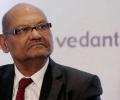
Mining magnate Anil Agarwal's conglomerate on Friday announced a major business shake-up, with flagship Vedanta Ltd approving a spin-off of its metals, power, aluminium and oil and gas businesses into separate listed entities and an overhaul of lucrative zinc unit planned as part of value creation and reducing debt load. Vedanta will issue one share of the five demerged businesses for every share held in the company, the firm said in a statement. The entire exercise, which would require shareholder and lender approval as well as a nod from the stock exchanges and courts, is expected to be completed in 12-15 months, its president for finance Ajay Agarwal said.
Debt management is going to be a worry for the Vedanta group until FY25 at least. However, the restructuring of business divisions in Vedanta India could lead to an unlocking of values. The group structure is fairly complex. Anil Agarwal-led Vedanta Resources (VRL), which is London-listed, has a lot of debt on the balance sheet. It will have to repay $1 billion in secured bonds by January 2024 and at least another $300 million in calendar 2024.

The re-opening of the Chinese economy, as it moves away from its zero-Covid policy, could help stabilise commodity prices, according to some of the country's top metal companies. They view this as a positive for demand, at a time when markets such as the US and Europe have been largely weighed down by slowdown concern now. "Most of us in the metals business are hoping the Chinese economy picks up because half of any metal demand, including demand for aluminium, comes from China.

Eight Sensex biggies such as Reliance, L&T, BHEL, SBI and ICICI Bank are among the worst hit.

As per Sebi norms, a public sector listed company should have 10 per cent public float by August 08, 2013.

Union Budget 2014-15 is positive for metals and mining companies.

The divergence shows lack of financial depth in the Indian stock markets.

The EV industry is at an inflection point and batteries will play a critical role ahead -- batteries and related components typically constitute 35-45 per cent of an EV's costs.

Divestment in PFC, REC, NHPC, Nalco, Hindustan Copper and NMDC could be considered
Vedanta investors were jittery on Tuesday as its share price fell and bond yields of its parent firm rose following concerns raised by a rating agency on its capability to repay debt maturing later this year. Shares of the mining and metals major were down by 7 per cent on Tuesday to Rs 268 a piece on the BSE. The company has lost market valuation of 30 per cent in the last one year and 13 per cent since January 1 this year. Yields on the bonds of Vedanta Resources, the parent firm of the BSE-listed Vedanta, shot up to 39.8 per cent - showing investors' rising concern over the group's debt situation
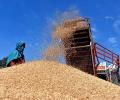
The uptick in prices ranging from steel to wheat could benefit lots of commodity-based companies -- from State-owned SAIL to the agro exporters.
